
From Entoto to Yerer
I grew up in Addis Ababa, a city held gently within a ring of mountains. Among them, Entoto Mountains stood as a constant presence—visible from almost anywhere, quietly watching over the capital. For many of us, Entoto was not something we studied—it was something we lived with. It framed our skyline, our journeys, and our sense of place.
Yet what we saw then, and what I understand now, are two very different things.
A mountain we thought we knew
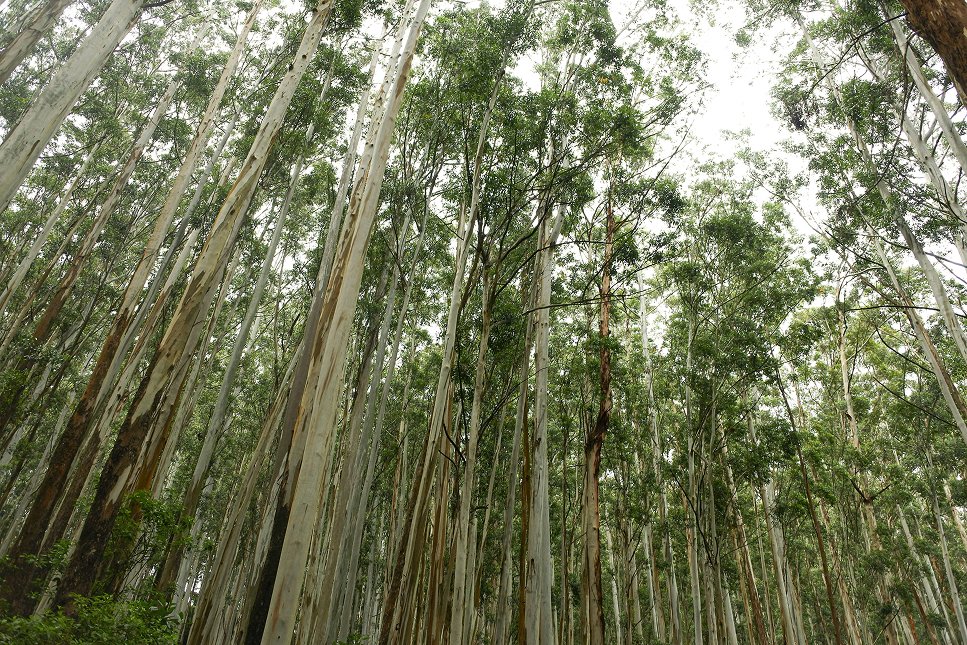
Growing up, Entoto was largely covered by eucalyptus trees. It was common to see women gathering firewood—collecting branches and leaves either for their homes or to sell in local markets. This activity was part of daily life, almost invisible in its normalcy.
At the time, it seemed natural.
But eucalyptus, as I later came to understand through my work with the Ethiopian Conservation Trust, had silently reshaped the ecosystem.
They consumed large amounts of water. They left the soil beneath them dry and bare. And they prevented undergrowth and biodiversity from thriving.
What appeared as ‘green coverage’ was, in reality, ecological depletion.
The transformation of Entoto
It was only after becoming involved with the Trust that I witnessed a different side of Entoto—one that had been carefully restored through the planting of indigenous trees.
During my visit, the transformation was not theoretical—it was visible, undeniable, and deeply moving. The ground was no longer barren but alive with vegetation. Water streams had begun to return, nourished by a more balanced ecosystem. Native birds had reappeared. Wildlife that had once disappeared was gradually coming back.
In contrast, nearby areas still dominated by eucalyptus stood in stark difference—dry, exposed, and ecologically limited.
This was not just reforestation. It was restoration—of balance, of biodiversity, and of life itself. What made this experience particularly powerful was its clarity.
You could stand in one place and see the difference between intervention and neglect.
This reinforced a simple but profound truth: when nature is supported in the right way, it knows how to recover. This is the essence of the Trust’s evolving approach: not just planting trees—but restoring entire ecosystems.
A new vision for Ethiopia’s living landscapes
Building on the success and learning from Entoto, the newly rebranded Ethiopian Conservation Trust has now expanded its efforts to Mount Yerer—one of the most prominent mountain ranges surrounding Addis Ababa. In the past year alone:
- 13,000 indigenous trees have been planted
- The project has been fully supported through Trust funding
- Restoration efforts are focused not only on planting, but on long-term ecosystem recovery
Like Entoto, Yerer faces continued challenges, including deforestation, soil erosion, and land degradation. But it also holds immense potential. The vision is not only to restore the land—but to protect it, allow it to regenerate, and eventually develop it into a sustainable eco-tourism destination. The hope is that this would stimulate environmental recovery, community engagement, and long-term economic support for conservation efforts.
Ethiopia’s natural heritage—its mountains, forests, and ecosystems—is both rich and vulnerable. Without intervention, degradation continues. With the right approach, recovery is not only possible—it is already happening.
The Trust’s direction is guided by a clear and evolving framework:
Ecological, social, and economic benefits: supporting projects that serve both nature and communities
Climate resilience: implementing nature-based solutions such as indigenous tree restoration
Transformation of landscapes: moving beyond isolated efforts to restore entire ecosystems and biodiversity
These principles reflect a shift from small-scale action to systemic impact.
Looking ahead
From Entoto to Yerer, what we are witnessing is more than conservation work. It is a rebalancing. A return. A quiet but powerful restoration of what once was—and what can be again.
As a Trust, we look forward to:
Deepening our work in areas already supported
Expanding into new regions where intervention is urgently needed
Partnering with communities and organisations to scale impact
Because ultimately, this work is not only about trees. It is about restoring the conditions for life to thrive—naturally, sustainably, and collectively.
Having grown up looking at these mountains, and now witnessing their renewal, this journey feels both personal and purposeful. What once was simply a familiar landscape has become a living example of transformation.
And perhaps that is the deeper message: when we restore the land; we also restore our relationship with it.